
Stock markets this week would take cues from global trends, the announcement of domestic macroeconomic data such as GDP numbers and foreign fund movement, analysts said. Besides, monthly auto sales and Purchasing Managers' Index (PMI) data for manufacturing and services sectors would also influence trading in the market, they added. Benchmark BSE Sensex tumbled 1,538.64 points or 2.52 per cent last week amid concerns that the US Federal Reserve might raise interest rates further to curb inflation.

At a time when global auto majors are struggling, carmakers in India have been able to expand their overseas presence with exports from the country registering whopping 57.04 per cent growth in the last fiscal.
Swedish auto major Volvo on Wednesday said it has shipped 150 heavy duty trucks, built at its India plant, to Korea in the last six months.

Markets pared early gains and ended on a flat note, weighed down by profit-taking in Oil & Gas and Auto shares. The Sensex ended at 17,850 - up three point. Nifty ended flat at 5,415.
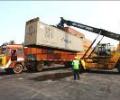
The government on Tuesday announced incentives worth Rs 450-500 crore (Rs 4-5 bllion) for exporters encouraging them to aggressively market products in China and Japan and build on the recovery witnessed since November last year.

The company had sold 85,669 units during the same month last year, Maruti Suzuki India said.

The company said its net sales during the quarter under review stood at Rs 5,061.49 crore (Rs 50.61 billion) as against Rs 4,817.07 crore (Rs 48.17 billion) in the same quarter last fiscal, up 5.07 per cent.

Eicher Motors is a leader in the premium motorcycle segment, where it holds market share of over 85 per cent under the Royal Enfield (RE) brand. The company's joint venture VE Commercial Vehicles (VECV) with Volvo, where it holds 54.5 per cent stake, gives it a strong footing in commercial vehicles (CVs). The company had good results in FY23 and it has a strong balance sheet and good operating margins.

India appears poised to sustain its growth in a more durable way than before with the economy carrying the momentum from FY23 into the current fiscal year, the Annual Economic Review for 2022-23 released by the finance ministry on Thursday said. However, the report cautioned that escalation of geopolitical stress, enhanced volatility in global financial systems, sharp price correction in global stock markets, a high magnitude of El-Nino impact, and modest trade activity and FDI inflows, are factors that could constrain the pace of growth. "Should these developments deepen and dampen growth in the subsequent quarters, the external sector may challenge India's growth outlook for FY24," the finance ministry said.
Bajaj Auto says that their motorcycle mix is profitable, and they have also seen a boost in three-wheelers and exports growth

The government is likely to extend fiscal incentives for production of toys, bicycles and leather and footwear in the forthcoming budget as it looks to expand production linked incentive (PLI) scheme to cover more high-employment potential sectors, sources said. The government has already rolled out the scheme with an outlay of about Rs 2 lakh crore for as many as 14 sectors, including automobiles and auto components, white goods, pharma, textiles, food products, high efficiency solar PV modules, advance chemistry cell and speciality steel. The scheme aims to make domestic manufacturing globally competitive and create global champions in manufacturing, and it is yielding solid results, sources said.

Bajaj Auto was the top gainer in the Sensex pack, surging 3.95 per cent followed by Maruti Suzuki at 2.69 per cent.

India can become the number one automotive manufacturing hub in the world within five years, but auto companies need to enhance safety features to reduce deaths due to road accidents, Union Minister Nitin Gadkari said on Thursday. In his inaugural address at the Auto Expo 2023 here, the minister for road transport and highways asserted that the government's target is to reduce these accidents by 50 per cent before the end of 2024 while asking the auto industry to take suo moto action for road safety as the government doesn't want to make anything mandatory. Gadkari's sentiments were also echoed by Minister of Heavy Industries Mahendra Nath Pandey, who lamented that while India has only 1 per cent of the total overall vehicles, the country accounts for 11 per cent of the total global deaths due to road accidents.
"We believe that growth expectations are still justified. However, the long product development cycles inherent to the export market and high capex requirement for expanding capacities has affected the performance of the sector in the recent past. We believe the performance is likely to improve significantly going forward," Edelweiss Securities' analyst Ashutosh Goel said in the company's research report.
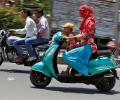
The two-wheeler sector has been underperforming its peers on the volumes front for over five quarters now. Even in the March quarter, Bajaj Auto and Hero MotoCorp posted a 17-24 per cent YoY decline in volumes, the sharpest in the listed auto universe. The ongoing impact of frequent price hikes, all-time high fuel prices, and muted rural sentiment has led to the lacklustre showing by two-wheeler makers. What has aggravated the situation for two-wheeler companies, which get almost all their sales from the internal combustion engine or ICE-based units, is the traction for electric two-wheelers (EV).
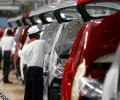
For an industry which saw sales shrinking in 2013-14, this is hope indeed.
Issues like high insurance cost and the announced price hike effective January could also weigh on sales in 2019. The only bright spot is the softening seen in fuel prices over the past month.

The company had sold 1,68,971 units in July last year, Bajaj Auto Ltd said in a statement. Total two-wheeler sales during the month also declined marginally at 1,68,731 units compared with 1,69,971 units in the same period a year ago, it added.
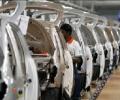
Australia is exploring possibilities of building better ties between its world-class firms and rapidly growing Indian automotive industries to create new export opportunities and help secure the ongoing strength of the multi-billion-dollar auto industry there.

The move will result in around 25 per cent reduction in overseas shipments from the company's Chennai plant this year at 190,000 units compared to 253,000 units last year.
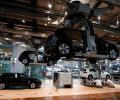
Passenger vehicle wholesales in India declined nearly 4 per cent to 279,501 units last month, auto industry body SIAM said on Wednesday. Passenger vehicle (PV) dispatches from factories to dealerships in March 2021 stood at 290,939 units. As per the latest data by the Society of Indian Automobile Manufacturers (SIAM), two-wheeler sales also fell 21 per cent to 11,84,210 units as compared with 14,96,806 vehicles in March 2021.

India's exports grew by 9 per cent to $14.6 billion (around Rs 66, 250 crore) in December.
Auto major Ashok Leyland on Friday said it would export buses to Pakistan soon and was also exploring the Chinese market.

GM has also exited from four other international markets, including Russia and Europe.
Indian auto major Mahindra & Mahindra has set up a joint venture with American manufacturer Navistar International to produce and market light, medium and heavy commercial vehicles for Indian and export markets.\n\n
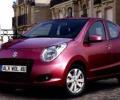
"Out of the total exports, A-Star alone will comprise one lakh units while the rest would be other models," Maruti Suzuki India executive officer (marketing) Mayank Pareek told reporters in New Delhi. The company currently has an inventory level of three weeks and is producing more to meet the upcoming festive demands. On the company's diesel-engine plans, Pareek said it will expand the production capacity to 300,000 units per annum by 2010-11 from the existing 2,40,000 units

After a sharp outperformance in the mid-and small-cap segments in the first half of calendar year 2023 (H1-CY23), analysts are now turning cautious on these two market segments and suggest investors stay selective and look for valuation comfort and earnings visibility before investing. The S&P BSE Midcap index has surged 13.7 per cent in H1-CY23, and the S&P BSE Small-cap index gained 12.7 per cent during this period, data shows. The S&P BSE Sensex, in comparison, has moved up 6.4 per cent.
ICRA said on Monday that domestic car sales is likely to grow by eight per cent annually over the next three years to 838,000 units in 2006-07, which will be driven largely by the compact and mid-size segments.

Maruti Suzuki India (MSI) on Wednesday reported over two-fold jump in its consolidated net profit to Rs 1,036 crore for the first quarter ended June 30, mainly due to a low base in the year-ago period. The auto major had posted a net profit of Rs 475 crore in the COVID-hit April-June quarter of the last fiscal. Its net sales rose to Rs 26,512 crore in the June quarter compared to Rs 17,776 crore in the same period of 2021-22.
DaimlerChrysler AG aims to buy auto parts worth over Rs 500 crore (Rs 5 billion) from India during the next two years, a top official of its local unit said.
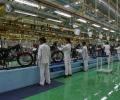
TVS Motor Company, on Wednesday, overtook Hero MotoCorp in terms of market value to become the sixth-largest automobile company on market capitalisation. he former's m-cap now stands at Rs 51,681 crore to the latter's Rs 50,951 crore. Bajaj Auto, with Rs 104,872 crore, is the only two-wheeler manufacturer in the top five. Shares of TVS have rallied 73 per cent this year while shares of Bajaj and Hero have risen only 3 per cent and 10 per cent, respectively. While sales, net profit and market share of TVS are lower than that of Bajaj and Hero, there are multiple triggers for the company.

The sharp correction in the Indian markets from their peak levels has made valuations attractive, say analysts, who advise buying selectively, but only from a long-term perspective. Fifty-six of the Nifty 100 stocks, according to Mahesh Nandurkar, managing director at Jefferies, now trade below the 10-year historical averages, including stocks in financial, select auto, and pharma sectors. "Valuation (one-year forward consensus price-to-earnings, PE) has declined 25 per cent from October 2021 peak, almost matching the 33 per cent price-earnings contraction during the 2011 tightening cycle when repo rates went up by 375 basis points (bps) versus 250 bps this cycle.
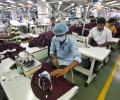
'A change we have seen after the Russia-Ukraine war is the energy crisis in Europe.' 'Earlier, in Europe, people used to change their clothes after 5 washes, now they are using it till 15-20 washes.' 'They used to change their entire wardrobe after 2 months or so, but because of the economic conditions, it has changed.' 'It has affected exports as 40% of our exports is to Europe, 30% to the US and 10% to the UK.' 'The war has to end for better days to come.'

After bumbling for years since 2014, the Modi government seems to believe that massive government expenditure will lead us to prosperity supported by 'seat-of-the-pants' decision-making, observes Debashis Basu.
Increase in the value of Rupee combined with rising interest rates has resulted in erosion of profitability and competitiveness of Indian exports by up to 12 per cent, according to a report by Ficci.
Maruti Udyog Ltd said on Wednesday that it would record highest-ever exports of 50,000 cars this fiscal.
The stock of auto component major Bosch was up 2.5 per cent on Wednesday and in the process hit its 52-week high. Expectations of higher volumes of medium and heavy commercial vehicles' (M&HCV), rise in content supplies on account of BS VI stage 2 implementation from April, and improved profitability are some of the positives for the stock. In addition to this, the company appointed a new managing director and joint managing director last week, which will come into effect from July 1.
 © 2026 Rediff.com - Investor Information - Advertise with us - Disclaimer - Privacy Policy - Sitemap - Feedback - About us - Terms of use - Grievances